

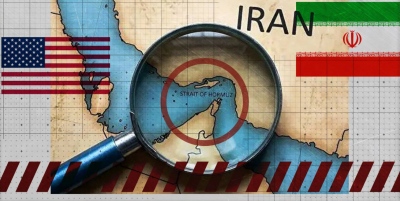
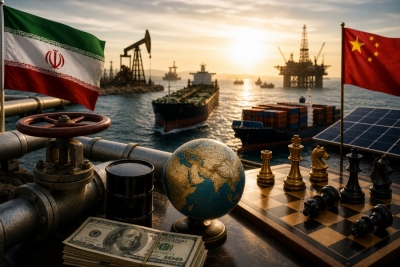
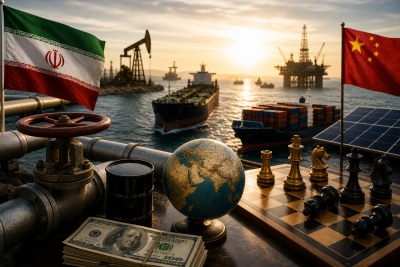
For 67 days, the Strait of Hormuz—the planet’s most vital energy artery—has ceased to function as a neutral maritime passage, serving instead as a geopolitical lever of power. Following the announcement of "Operation Freedom" by US President Donald Trump—an initiative prompting serious questions regarding its objectives and implementation—the Iranian military moved to issue a clear warning to commercial vessels and tankers: Do not cross the Hormuz Strait without first coordinating with us.
At the same time, Iran warned the US Navy that should it appear, it will come under fire. It is evident that under Iran’s suffocating control, free navigation has been transformed into a privilege dependent on political and military permission, causing a chain reaction of upheaval in markets, security, and the balance of power. From skyrocketing energy costs to the realignment of strategic alliances, this crisis is not limited to a regional confrontation; it is evolving into a turning point for the global system. As the flow of oil passes through a politically controlled strait, the world approaches a new era where geography is once again a decisive weapon of power.
Iran holds absolute control
More than two months have passed since Iran gained full control of the Strait of Hormuz, making the passage of ships without authorization from Tehran virtually impossible. This is an unprecedented situation in modern history, the consequences of which go beyond a simple naval crisis and have sent shockwaves through the structure of global power. It is no longer just a "security risk"—the world is facing a literal blockade of an energy hub.
The military's warning
Characteristically, the Iranian Armed Forces continue to monitor the Strait of Hormuz, calling on all vessels to refrain from transit without coordinating with Tehran. This was stated by Ali Abdollahi, commander of the "Khatam-al-Anbiya" central strategic headquarters. "We are making every effort to ensure the security of the Strait of Hormuz and are controlling the situation. We call on all commercial ships and tankers to refrain from any transit action without coordination with the armed forces stationed at the Strait, so as not to jeopardize their safety," Abdollahi maintained, according to Iranian state television. Abdollahi warned that any foreign armed forces, specifically the US military, will be struck if they attempt to approach or enter the Strait.
Blow to the global economy
Over the last 67 days, the export flow of crude oil, products, and even non-petroleum cargo has been disrupted, with a direct impact on all key indicators of the global economy. The rise of war insurance costs to multi-year highs, the surge in freight rates, tanker queues at sea, and forced diversions to longer routes that multiply the cost of every cargo represent only the surface dimension of the crisis. Its true impact is reflected in global inflation, supply chain shocks, and strategic re-evaluations by major powers.
Control of global energy
This blockade sent a clear message: control of Hormuz means control of the global energy order. Tehran now possesses a lever based not on weapons but on geopolitical position. Every tanker transiting this strait essentially depends on a decision made in Tehran. This reality has transformed the nature of the conflict from a military confrontation into a "full-scale economic-geopolitical conflict."
US attrition
For the US, this situation means a direct attrition of resources. Washington has been forced to maintain its fleet in the region continuously, manage alternative supply lines, and absorb the cost of the energy shock domestically. These pressures, as in previous Middle East crises, are once again having a restrictive effect on the American economy. The prolonged crisis fuels inflation and weakens the competitiveness of US industry.
China strengthened
Conversely, China is strengthening its position through this crisis. East Asia’s heavy dependence on Persian Gulf oil has led Beijing to a more pragmatic approach: long-term energy contracts with regional producers, the development of land routes, participation in transport projects, and the redirection of trade to new paths. With these tools, China is evolving into a new central axis of economic relations in the Middle East. The Hormuz blockade, even with controlled limited passage, increases the region's dependence on China and enhances Beijing's bargaining power against the US.
The message to the Gulf
Simultaneously, the Persian Gulf countries, which for years relied on American military protection for their energy security, are now faced with the clearest evidence of this model's limits. 67 days of blockade without a substantial restoration of freedom of navigation are pushing them toward diversifying their security options, strengthening relations with the East, tightening ties with China, and re-examining their policy toward Iran.
A multipolar order arrives
All these developments show that the conflict with Iran is not just a regional crisis but a turning point in the world's transition toward a multipolar order. If Hormuz remains under a state of controlled blockade, the structure of energy trade, investment flows, the balance of economic power, and even strategic alliances will change radically. What the world faces today is not merely the interruption of a shipping route—it is a redefinition of power through a maritime strait.
The critical Trump – Xi Jinping meeting
China remains focused on the upcoming meeting between its leader, Xi Jinping, and US President Donald Trump, regardless of the situation in the Middle East. Beijing views the long-standing US conflict with Iran with caution, believing it may have strengthened its own negotiating position, according to Chinese sources. This rare face-to-face meeting, already delayed due to the US-Israel war with Iran, is now scheduled for May 14–15, according to the White House. Sources say Beijing sees the summit as a unique opportunity to shape a more stable long-term relationship with its greatest economic and military competitor.
Dissent in Beijing
However, despite the perceived advantage, Beijing remains extremely cautious. According to CNN, there is disagreement within the government on how to manage the numerous complications of the conflict, including the possibility that the Strait of Hormuz—through which China imports about a third of its oil and gas—might remain closed when Trump arrives in the Chinese capital. Trump’s visit "is like no other visit by a head of state," a Chinese source stated anonymously. "His term will have a lasting impact on the global order and has already radically changed how the US perceives its interests."
Dangerous scenarios
The visit was originally intended to focus on confirming major agreements in key sectors, but the Iran crisis "has seriously disrupted" China's planning, according to Cui Hongjian of Beijing Foreign Studies University. Chinese foreign policy prioritizes Sino-US relations, as their stability affects relations with other nations. However, the involvement of Iran—a close partner of Beijing—has complicated the situation. While the summit date has not been officially confirmed, the prospect of a peace deal between Washington and Tehran remains uncertain, and a resumption of hostilities cannot be ruled out. Both scenarios carry risks for China.
US strategy
Trump may seek to resolve the Iran issue first to appear strong; however, if he attacks Iran after his visit to China, it could create the impression that Beijing abandoned Tehran. Furthermore, according to sources, the US strategy to target countries like Venezuela and then Iran aims to limit China's influence in these regions. However, the war in Iran did not evolve as expected for the US. Instead of boosting American power, it led to a difficult and unpopular conflict with serious global economic consequences.
Trump weakened
Wu Xinbo, an advisor to the Chinese Foreign Ministry, stated that if the US had prevailed, Trump would have a stronger negotiating advantage. However, their inability to manage Iran has weakened their position in negotiations with China. China reportedly played a role in bringing Iran to the negotiating table. Despite the ceasefire, no stable peace has been achieved between Washington and Tehran. The situation may offer China an opportunity to strengthen its position ahead of difficult midterm elections for Trump, who wishes to present tangible results to voters, such as large Chinese purchases of American goods and Boeing aircraft.
China's goals
China is ready to leverage its domestic market and its dominance in rare earths to achieve goals such as: US opposition to Taiwan's independence, the easing of restrictions on high-tech exports, and the lifting of sanctions on Chinese companies. Despite initial concerns, the current situation seems to favor China. The war has enhanced Beijing’s international image as an anchor of stability. "The US fights without winning, while China wins without fighting," said Joerg Wuttke. China’s political system, with its emphasis on long-term planning and self-sufficiency, has given it an advantage in dealing with economic shocks.
No change
Despite Trump’s grand reception in Beijing in 2017, relations between the two countries have deteriorated in recent years due to trade, technology, Taiwan, COVID-19, and other tensions. Ahead of the summit, China is not expected to significantly change its strategy. Although both sides possess significant bargaining chips, it is not clear that the war in Iran has substantially altered the balance of power. As former US diplomat William Klein noted, "the war in Iran affects the context of the visit, but does not give a clear advantage to either side."
Unanswered questions about Operation Freedom
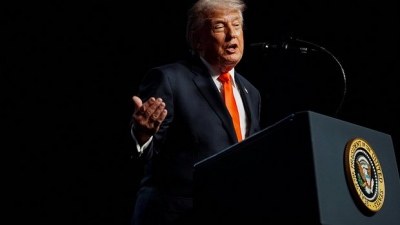
The US plan to "guide" ships through the Strait of Hormuz, announced by President Donald Trump just hours before implementation, leaves many unanswered questions. US Central Command stated on X that the operation, named Project Freedom, will include guided-missile destroyers, over 100 land and sea-based aircraft, and multi-domain unmanned platforms. However, it has not been clarified how these assets will contribute to the resumption of commercial vessel transit through the strait.
Strengthening... security
According to CNN, Jennifer Parker from the Lowy Institute estimated that the US military will likely increase its presence in the region to bolster the sense of security for merchant ships. As she stated, it is more about an operation to change the situation in the strait so that ships "feel safe," rather than direct protection of specific vessels. The mission could include US warships and aircraft monitoring the area and identifying threats such as small craft. At the same time, it is considered unlikely that a convoy system will be implemented, where warships closely escort commercial vessels, due to the constraints of the strait and the risks involved.
Naval battle scenario
To block the operation, Iran would have to clash directly with the US Navy—something that has not happened so far. Parker noted that this strategy "forces Iran to escalate," as it would have to attack US warships. Trump's announcement drew an immediate reaction from Tehran, with Ebrahim Azizi warning that any American intervention in the strait would be considered a ceasefire violation. Trump had stated that any "interference" from Iran would be met with "force."
Reservations from shipping executives
However, shipping executives appear cautious about whether the plan reduces risk. Bjørn Højgaard, CEO of Anglo-Eastern, emphasized that cooperation from both sides is required to restore transit. So far, Washington has avoided bringing warships close to the Iranian coast due to the threat from missiles and small attack boats. The strait is particularly narrow (about 24 miles at its narrowest point), while tankers move in channels only 2 miles wide, making both boarding operations and escorting difficult. Iranian forces capable of threatening such operations are dispersed and mobile, with the ability to use drones, missiles, and mines. Collin Koh from Singapore questioned whether it is feasible to neutralize all these threats.
Insufficiency of assets
At the same time, there is a question of asset sufficiency: the US appears not to have enough destroyers in the region for escort operations. For comparison, during the so-called Tanker War in the 1980s (Operation Earnest Will), multiple warships were required to escort only a few tankers. Today, the number of available ships does not seem sufficient for a similar large-scale operation. Thus, according to analysts, the US strategy focuses more on presence and deterrence than on direct vessel escort.
www.bankingnews.gr


Σχόλια αναγνωστών